
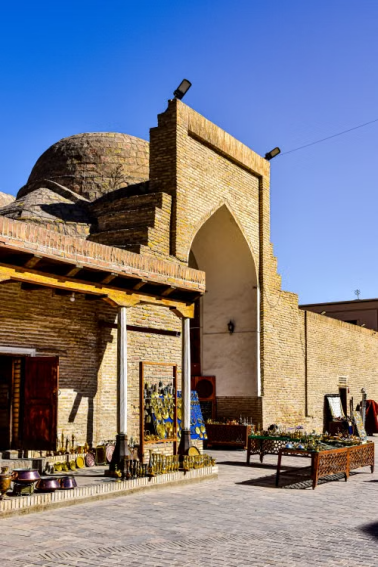
Filename: Tim-Abdullah-Khan-Bazaar-Bukhara
Alt Text: Historic domed entrance of the Tim Abdullah Khan Bazaar in Bukhara, Uzbekistan
Long before airports and highways connected this region to the rest of the world, its bazaars did the job.
Markets across Central Asia have functioned as trading posts, meeting places, and centers of daily life for centuries, and many still operate the same way today. For travelers, they’re one of the clearest windows into how people here actually live, offering a more textured picture of the region than any single monument can provide.
Why Do Markets Matter So Much in This Region?
Central Asia sat at the heart of the historical Silk Road, and its bazaars were the physical infrastructure of that trade. Goods, ideas, and cultures moved through these markets for over a thousand years, and that layered history is still visible in the architecture surrounding many of them today.
One transnational UNESCO World Heritage corridor even spans China, Kazakhstan, and Kyrgyzstan as a single connected Silk Road site, underscoring how interconnected this trade network always was.
What Makes Bukhara’s Bazaars Worth Visiting?
Bukhara’s covered trading domes, including the Tim Abdullah Khan Bazaar, are some of the best-preserved examples of Silk Road-era commercial architecture anywhere in the world.
Merchants once sold specific goods, silk, spices, jewelry, under each dome, and while the exact specialties have shifted over time, the buildings themselves remain remarkably intact, still functioning as working markets rather than museum pieces.
· Traditional carpets and textiles, often handwoven using techniques passed down for generations
· Metalwork and ceramics from artisans still practicing centuries-old methods
· Suzani embroidery, a distinctive regional needlework tradition
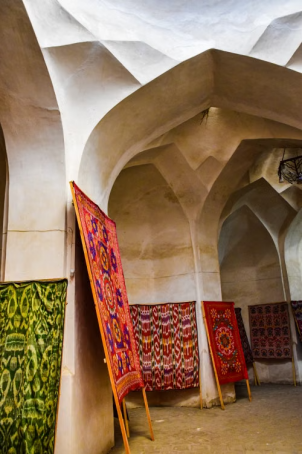
Filename: Handmade-carpets-Bukhara-market
Alt Text: Handmade carpets displayed near a historic building wall in Bukhara
What Should You Look for in Tashkent’s Markets?
Tashkent’s Chorsu Bazaar operates on a larger, more contemporary scale, spread across a massive domed structure that organizes vendors by category. Fresh produce, spices, dried fruits, and household goods fill the stalls, offering a more everyday, less tourist-oriented market experience than some of the more polished historic bazaars elsewhere in the region.
Are Markets Different in Kyrgyzstan and Kazakhstan?
Yes, noticeably. Bishkek’s Osh Bazaar leans heavily into food, from fresh produce to prepared dishes, reflecting the more agrarian character of Kyrgyzstan’s economy. Markets in Kazakhstan’s cities often blend Central Asian goods with a wider range of imported products, a reflection of the country’s role as a regional trade and transit hub. Almaty’s Green Bazaar, in particular, offers a good introduction to this blend, with sections dedicated to everything from spices to household goods.
How Should You Approach Shopping at These Markets?
A few habits make for a smoother, more respectful market visit:
· Carry small denominations of local currency, since vendors often can’t break large bills
· Ask before photographing individual vendors or their stalls
· Bargaining is common in some markets but not universal, so gauge the setting first
· Take time to watch a craftsperson work before buying, since the process is often as interesting as the finished product

Filename: Weaver-craft-detail-textile
Alt Text: Close-up of a weaver’s hands working with thread on a traditional loom
What Do Markets Reveal That Monuments Don’t?
Monuments show you a region’s history. Markets show you its present. The negotiation, the small talk, the specific way a vendor arranges dried fruit or folds a carpet, all of it reflects daily habits that haven’t changed much in generations, even as the goods themselves have evolved.
Ready to Experience These Markets in Person?
Guided visits to Bukhara’s historic bazaars and Tashkent’s Chorsu market are included on many small-group Five Stans tours, giving travelers time to browse without feeling rushed or lost in an unfamiliar setting.
East Site Travel, a US-based tour operator with an on-the-ground office in Uzbekistan, builds market visits into its Central Asia tours as a standard part of the cultural itinerary, and its luxury Five Stans tours often include additional time with specific artisans for travelers with a particular interest in textiles or craft. Travelers who want to book a Five Stans travel itinerary built around the region’s markets and living traditions can contact East Site Travel directly for itinerary details.
About the Author: Nadia Hollis is a travel writer focused on markets, food culture, and craft traditions around the world. Her work explores how everyday commerce reflects a region’s deeper cultural history.
About the Author


